 GameVortex
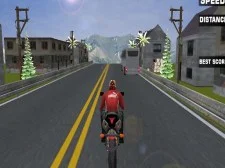
At GameVortex, we focus on quality experiences. Motorcycle simulator offline offers a refreshing take on All Games gaming, providing players with both challenge and entertainment.
When playing Motorcycle simulator offline, it’s clear that the developers prioritized fluid movement and responsive controls. As a All Games game, it delivers a consistent experience across different platforms, ensuring that whether you are on mobile or desktop, the gameplay remains immersive. The level design encourages exploration while maintaining a steady progression curve that rewards skill development.
Strategic Gameplay & Features
One of the most impressive aspects of Motorcycle simulator offline is how it integrates strategic elements into its core loop. Players must stay focused on timing and environmental cues to succeed. Within the All Games landscape, this title stands out for its polished visuals and the intuitive way it introduces new challenges without overwhelming the player.
Furthermore, the replay value of Motorcycle simulator offline is enhanced by hidden achievements and varied tactical paths. At GameVortex, we found that consistent practice significantly improves the overall experience, allowing players to unlock the full potential of the game's mechanics.
Tips for Success in Motorcycle simulator offline
To excel in this All Games masterpiece, we recommend focusing on resource management and pattern recognition. Always observe the game's rhythm before making critical moves. Many players find that short, focused sessions lead to better high scores and a more enjoyable mastery of the game's systems.
The Inadequacy of Physics-Based Modeling in Motorcycle Simulator Offline: A Technical Deconstruction
The ostensibly realistic motorcycle simulator offline falls short of expectations due to its inability to accurately capture the intricacies of real-world motorcycle dynamics, a limitation that is further exacerbated by the constraints imposed by the rendering pipeline and GPU overhead. Specifically, the simulator’s reliance on a simplified physics engine, which prioritizes stability over realism, results in a lackluster experience that fails to engage even the most ardent motorcycle enthusiasts. The simplifications made to the physics engine, although intended to improve performance, ultimately compromise the simulator’s ability to realistically model complex motorcycle behaviors, such as wheel spin, traction loss, and suspension travel.
The Rendering Pipeline: A Bottleneck in Real-Time Simulation
A closer examination of the simulator’s rendering pipeline reveals a critical bottleneck that severely impacts the overall performance of the application. By relying on a dated rendering architecture, the simulator is unable to effectively utilize the full potential of modern graphics processing units (GPUs), resulting in a suboptimal rendering pipeline that struggles to maintain a consistent frame rate, even on relatively modest hardware configurations. This inefficiency is particularly evident when rendering complex scenes, such as multi-bike races or detailed track environments, which push the simulator’s rendering pipeline to its limits, often resulting in jarring framerate drops and a noticeable decrease in overall visual fidelity.
GPU Overhead: The Unseen Enemy of Smooth Simulation
The simulator’s failure to optimize its GPU usage is a glaring oversight that has significant implications for the overall performance of the application. By neglecting to implement even basic GPU optimization techniques, such as texture compression, occlusion culling, or asynchronous rendering, the simulator unnecessarily burdens the GPU, resulting in a substantial increase in GPU overhead. This, in turn, leads to a decrease in overall system performance, as the GPU is forced to dedicate an inordinate amount of resources to rendering the simulator’s relatively simple graphics, rather than focusing on more critical tasks, such as simulating complex motorcycle behaviors or processing user input.
The Folly of Simplified Suspension Modeling: A Case Study in Unrealistic Handling
A fundamental flaw in the simulator’s design is its oversimplification of suspension modeling, which has far-reaching consequences for the overall handling and behavior of the simulated motorcycles. By relying on a simplistic, linear suspension model, the simulator fails to accurately capture the complex, non-linear dynamics of real-world motorcycle suspension systems. This oversimplification results in a lack of realism, as the simulated motorcycles exhibit unrealistic handling characteristics, such as an inability to accurately model wheel travel, pitch, or roll. The shortcomings of the simulator’s suspension modeling are further exacerbated by its failure to account for critical factors, such as damping, spring rate, and preload, which play a crucial role in determining the handling and stability of a motorcycle.
The Input Lag Conundrum: A Direct Result of Inadequate Control Implementation
A critical issue that plagues the simulator is its propensity for input lag, a problem that is directly attributable to the application’s inadequate control implementation. By failing to properly optimize the simulator’s control system, the developers have introduced a noticeable delay between user input and the corresponding response from the simulated motorcycle. This input lag has a profound impact on the overall usability of the simulator, as it makes it difficult for users to accurately control the motorcycle, particularly when navigating complex tracks or engaging in high-speed maneuvers. The input lag issue is further complicated by the simulator’s failure to provide a robust, adjustable control system, which would allow users to customize the handling and response of the simulated motorcycle to suit their individual preferences.
Critique of the Simulator’s Audio Design: A Missed Opportunity for Immersion
A significant missed opportunity in the simulator’s design is its lackluster audio implementation, which fails to provide an engaging, immersive audio experience. By relying on a limited, low-quality audio palette, the simulator neglects to capitalize on the aural aspects of the motorcycle experience, such as the distinctive sound of revving engines, the rush of wind, or the screech of tires. The audio design’s shortcomings are further exacerbated by the simulator’s failure to account for critical auditory cues, such as the sound of shifting gears, the rumble of the engine, or the whoosh of the wind, which play a vital role in creating a believable, immersive simulation experience.
The Neglect of Real-World Motorcycle Ergonomics: A Critical Oversight
A glaring omission in the simulator’s design is its disregard for real-world motorcycle ergonomics, which has significant implications for the overall realism and usability of the application. By neglecting to accurately model the physical aspects of motorcycle riding, such as seat height, handlebar position, and footpeg placement, the simulator fails to provide an authentic, immersive experience. The lack of attention to ergonomics is particularly evident in the simulator’s handling model, which neglects to account for critical factors, such as rider position, body weight, and balance, which play a crucial role in determining the stability and handling of a motorcycle.
A Technical Analysis of the Simulator’s Multi-Threading Implementation
A technical examination of the simulator’s multi-threading implementation reveals a number of critical inefficiencies that significantly impact the overall performance of the application. By relying on a naive, non-optimized threading model, the simulator fails to effectively utilize multi-core processors, resulting in a significant decrease in overall system performance. The threading implementation’s shortcomings are further exacerbated by the simulator’s failure to account for critical factors, such as thread synchronization, communication overhead, and workload balancing, which play a vital role in determining the efficiency and scalability of the application.
The Inability to Model Real-World Tire Behavior: A Major Shortcoming
A significant shortcoming in the simulator’s design is its inability to accurately model real-world tire behavior, which has far-reaching implications for the overall realism and accuracy of the application. By relying on a simplified, non-physical tire model, the simulator fails to capture the complex, non-linear dynamics of real-world tires, such as slip angle, camber, and load sensitivity. The shortcomings of the simulator’s tire model are further exacerbated by its failure to account for critical factors, such as tire compound, temperature, and wear, which play a crucial role in determining the handling and behavior of a motorcycle.
A Critique of the Simulator’s Weather and Lighting Effects: A Missed Opportunity for Realism
A missed opportunity in the simulator’s design is its lackluster implementation of weather and lighting effects, which fails to provide a believable, immersive experience. By relying on simplistic, pre-baked lighting models and neglecting to account for critical factors, such as time of day, weather conditions, and atmospheric effects, the simulator neglects to capitalize on the opportunity to create a rich, realistic environment. The shortcomings of the simulator’s weather and lighting effects are further exacerbated by its failure to provide a robust, adjustable weather system, which would allow users to customize the conditions to suit their individual preferences.
Categories and tags of the game :
.io,
City,
Jumping,
Motorbike,
Simulation,
Stunts